 Explore the Heart of South Africa: Nature, Culture, Adventure
Dune Soap-berry
Afrikaans name: Duineseepbessie
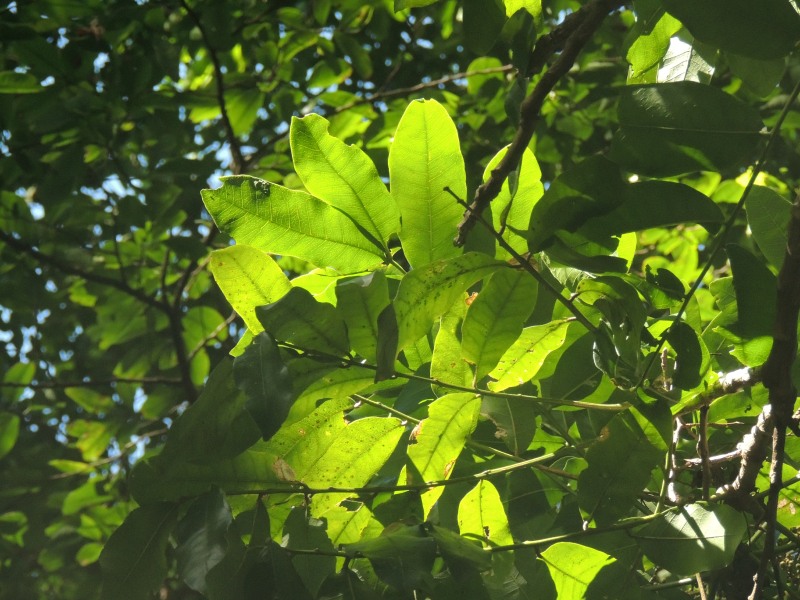
Dune Soap-berry tree
Photo © Steven Herbert
Deinbollia oblongifolia
The Dune Soap-berry gets its common name from the soap that can be made from its seeds. The fruit of the tree is also edible and various other parts of the tree are said to help treating some medical ailments. Although it is not the most attractive tree it is a good addition to an indigenous garden as it attracts so much wildlife.
It's not only humans who can feed off the Dune Soap-Berry. Various mammals eat the leaves while monkeys enjoy the fruit. Fruit-eating birds are also attracted to the fruit. It also attracts a variety of insects. It is the host tree for numerous species of butterfly.
The tree usually remains small and is often not much more than a shrub, although under certain conditions they can reach a height of 9 metres. The small creamy-coloured flowers appear in clusters. Flowers may be on the tree from May to June. The fruit is small and almost looks like a bunch of grapes. As the fruit matures it turns yellow. The fruit is initially hairy but becomes smooth.
The Dune Soap-berry is found in various types of forest as well as in bushveld and coastal bush. Its distribution runs from the Eastern Cape through to Mozambique. It is also present in some areas of Mpumalanga.
References and further reading
Trees of Southern Africa - 3rd edition - Author: Keith Coates Palgrave - Published: 2002 - Page: 647Butterfly Gardening in South Africa - Author: Jill Reid - Published: 2000 - Page: 90
Know Them by their Fruit - Author: AT Ankiewicz - Published: 2021 - Page: 96
The Beach Book - Author: Jerry Gosnell - Published: 2011 - Page: 138
The Complete Field Guide to Trees of Natal, Zululand and Transkei - Author: Elsa Pooley - Published: 1994 - Page: 288
For more info: SANBI
This website features affiliate links, meaning we’ll earn a small commission if you purchase through these links.
Copyright Steven Herbert Projects, 2013 - 2025. All rights reserved.